
What 40 years of research tells us about kids and gratitude (and why we keep getting it wrong)
- Big Human Jenna

- Oct 23, 2025
- 3 min read

In 1976, a few researchers did something wonderfully strange. They followed kids around on Halloween night with clipboards and tape recorders to see when children naturally said thank you.
It sounds like the start of a children’s story, but that one night of trick-or-treating changed everything we know about how kids learn gratitude. And yet, every November, we still pull out the construction-paper trees and go around the table naming what we’re thankful for, without realizing we’ve been skipping over what decades of research actually shows: gratitude isn’t something you teach, it’s something kids grow into.

The moment that changed everything

Those Halloween recordings revealed something big. Gratitude increases with age, but not because kids suddenly learn better manners. It’s because their understanding deepens.
A six-year-old sees the exchange in simple terms: say “trick or treat,” get candy. But an older child starts to notice the intention behind the gesture, the smile, the time it takes to answer the door, the small act of giving. That’s when gratitude starts to take root. Not as a reflex, but as recognition.
What really sparks gratitude (it’s not what we think)

If you’ve ever wondered why your child barely mentions an expensive birthday party but lights up talking about making pancakes at midnight, there’s a reason.
Kids feel the most gratitude when something feels personal. When they sense that someone thought about them, made an effort, or did something that felt just for them. It’s not about scale, it’s about connection.
We think gratitude looks like a thank-you note. But for a child, it might look like a quiet smile, a tight hug, or a story they retell again and again.
Why we keep getting it wrong
Researchers say gratitude has four parts:
Noticing what someone did.
Understanding why they did it.
Feeling something in response.
Expressing it.
Most of us skip to step four. We tell kids to “say thank you” without helping them slow down for the part that actually matters—the noticing, the feeling, the meaning. We prompt the words, but miss the wonder.
And that’s where so many of us get tripped up. We assume gratitude is always available, that kids can just reach for it if we remind them. But the truth is, sometimes they simply can’t.
When gratitude just isn’t available
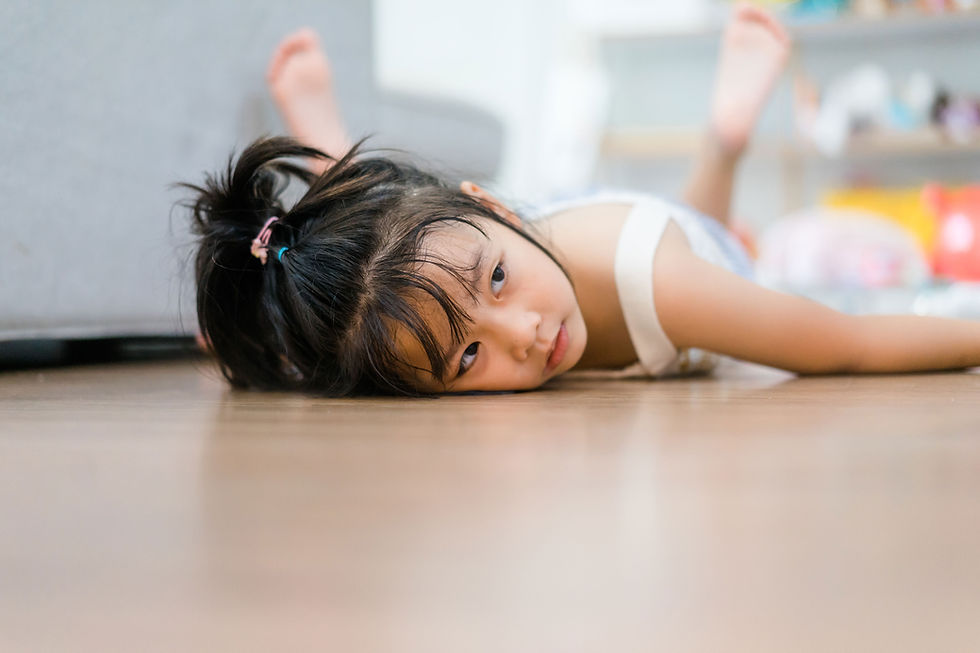
Sometimes kids simply can’t access gratitude, and that’s not defiance—it’s development.
When they’re tired, overstimulated, or caught in situations that are more about adult joy than theirs, the part of the brain that registers appreciation just can’t click on. Researchers call these missed opportunity moments. They’re normal. They pass.
Understanding this helps parents exhale. Gratitude isn’t proof of good character, it’s a reflection of bandwidth.
How gratitude actually grows

After forty years of research, it all comes down to this: gratitude is built in the quiet moments, not the orchestrated ones.
✨ Micro over major: Noticing small kindnesses—someone saving a seat, sharing a snack, giving a compliment—builds the muscle faster than any “gratitude journal” can.
✨ Be specific: “Thanks for reading the story with the silly voices” sticks longer than “Thanks for everything.”
✨ Follow their lead: Let them appreciate what matters to them, even if it feels tiny or silly.
✨ Model it: Let them catch you being thankful for good weather, a kind stranger, or the moment itself.
The real lesson
We’ve made gratitude too complicated. Kids don’t need scripts or seasonal crafts to learn it. They need presence. They need to see us noticing the good, naming it, and feeling it.
Gratitude isn’t something to teach at the dinner table, it’s something that happens in the ordinary moments. Because kids already know how to feel grateful. Just not always for what we expect, when we expect it, or how we expect them to show it. And that’s not the problem, it’s the process.
__________________________________________________________________________________
References
Bono, G., & Froh, J. (2014). Seven ways to foster gratitude in kids. Greater Good Magazine, UC Berkeley.
Freitas, L. B. L., Silveira, P. G., & Pieta, M. A. M. (2009). [Study referenced in PMC5224866.]
Froh, J. J., Sefick, W. J., & Emmons, R. A. (2008). Counting blessings in early adolescents. Journal of School Psychology, 46(2), 213-233.
Gleason, J. B., & Weintraub, S. (1976). The acquisition of routines in child language. Language in Society, 5(2), 129-136.
Hussong, A. M., et al. (2018). Parent socialization of children’s gratitude. Applied Developmental Science, 23(4), 371-384.
Hussong, A. M., & Colleagues. (2022). What parents and children say when talking about children’s gratitude: A thematic analysis. [PMC9286011.]
Nelson, J. A., et al. (2013). Preschool-aged children’s understanding of gratitude. British Journal of Developmental Psychology, 31(1), 42-56.
Taylor, M. (2024). Interview on gratitude practices. Children’s Hospital Colorado.
Note: This post draws from multiple research sources. For academic use, please refer to the original studies.


Comments